

Tile Roof Painting in Sarasota and Nearby Towns
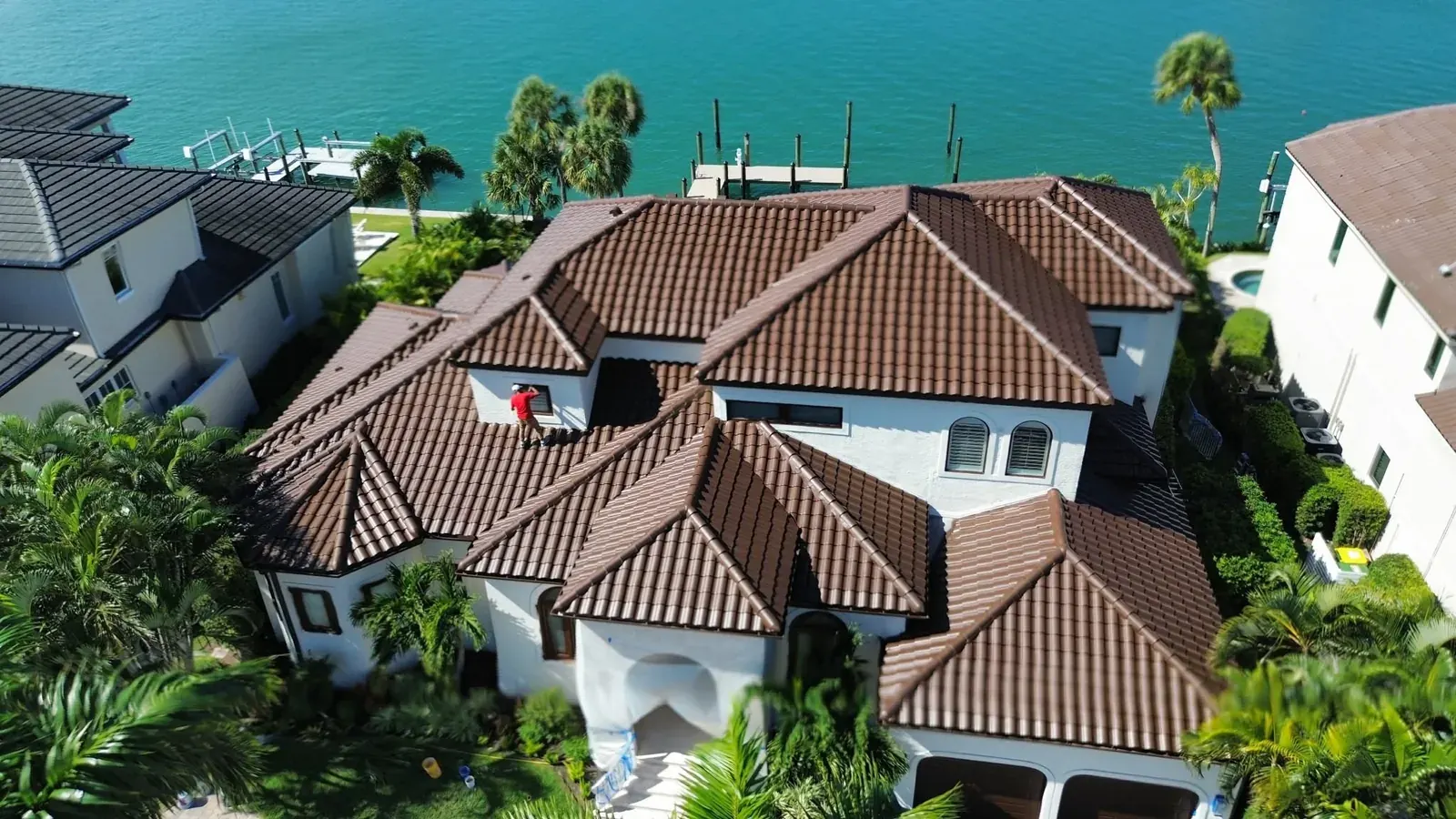
Paint is a good fit for a tile roof when the tile is sound and the problem is only how it looks. If tiles are cracked, loose or crumbling, paint will not fix that. Around Sarasota, a good job rests on three things: a roof that passes a close look, a prep process you can explain back to someone, and a schedule that allows for Gulf Coast weather.
Check the roof before planning paint
Start with the tile itself. A coating changes color and adds a surface layer. It does not hold a cracked tile together or put a slipped one back in place. Any tile that is cracked, chipped through or loose gets repaired or replaced before anything is applied.
You can learn a lot from the ground, or with binoculars. Look for tiles sitting at odd angles, gaps along the ridge (the peak line, capped with its own tiles), and dark streaks that follow the water path. Stay off the roof. Tile snaps under a boot, and a fall from a pitched roof is a serious risk. A crew that inspects roofs every week knows where to step.
Surface wear or a roof problem?
Sort what you see into two piles. The first pile is cosmetic and usually suits cleaning and recoating:
- Even fading and dull color from sun exposure.
- Old finish that breaks down into a fine powder. A crew checks this by wiping a dry hand across the tile, and if powder or color comes off, the old coat is failing at the surface.
- Green or black patches of algae, mildew or moss. These need treatment and cleaning first, or they grow back under new paint.
The second pile means the roof needs work before any paint:
- Cracked or broken tiles.
- Slipped tiles, or gaps at the ridge or hips, which point to fastening or mortar trouble. Have a roofer assess these.
- Stains on ceilings inside, which can mean a leak below the tile. Find and fix the leak first.
Understand the preparation and coating steps
Prep decides how long a coating lasts. Paint over dirt, algae or loose old finish will peel, no matter how good the product is. Ask the contractor to walk you through the process in plain terms before you sign anything. The usual order looks like this:
- Repairs. Cracked and loose tiles are fixed or swapped, and the ridge and hip caps are checked.
- Cleaning. Dirt, algae, mildew and powdery residue are washed off. Ask what method is used and how the crew keeps water from being driven under the tile.
- Drying. The tile has to dry fully before coating. Ask how the crew confirms that.
- Primer or binder where needed. A binder is a thin coat that locks down leftover powder and helps the topcoat grip. Ask whether your tile needs one.
- Topcoat. The finish goes on in the number of coats the manufacturer calls for.
Questions about the coating and the details
Confirm the coating is made for your type of tile, concrete or clay, and ask to see the manufacturer's data sheet. It lists the surface conditions, temperature range and cure requirements the product needs. Then ask about the spots where roofs tend to fail first: flashing (the metal at walls, chimneys and valleys), vents, pipe boots, and the joints where tile meets other surfaces. A good answer names each one and says how it will be handled.
Our tile roof painting work follows this same order: inspect, repair, clean, then coat. If your home has more than one roof type, such as tile on the main house and a flat section over a garage or lanai, our wider roof painting page covers those options.
Plan around Sarasota area weather
Florida Gulf Coast winters are usually mild, which makes the cooler months a popular time to schedule roof work. Summers often run hot, humid and stormy, with afternoon thunderstorms common from June to September, and hurricane season runs from June into November. Storms can interrupt a job or leave a roof wet for days.
November and December are often drier than summer, but not always. Morning dew, high humidity and passing fronts can still keep tile damp or slow the way a coating dries and cures. Cure is the period when the coating hardens and reaches its full water resistance, and it depends on temperature, humidity and moisture, not just the calendar.
Put three weather questions to the contractor:
- What conditions will you wait for before cleaning and coating?
- What does the data sheet say about drying time between coats and full cure?
- What happens if rain shows up mid-job?
How your location changes the picture
Roofs across the Sarasota area face the same basics: strong sun, salt and humidity in the air closer to the water, and heavy summer rain. Homes near the coast or under tree cover tend to collect more algae and mildew, so cleaning can take more effort. If one slope of your roof stays shaded, expect it to look worse than the sunny one.
In Lakewood Ranch, if your home sits in a managed community, check with your HOA about approved roof colors before choosing one. Homeowners in Bradenton and in Bee Ridge can use the same checklist as a baseline: sound tile, thorough cleaning, a coating suited to your tile, and a schedule that leaves room for weather. We also work in Sarasota, Venice and other nearby towns.
Choose a practical next step
Have the roof assessed before you decide whether painting is the right call. An honest assessment may show the roof is ready for coating, needs repairs first, or needs a different fix altogether. Ask for the proposed prep, coating and weather plan in writing so you can compare it with any other quote.
We offer a Free Estimate for tile roof painting around Sarasota. Call (941) 539-4357 and we will look at your roof and tell you plainly what it needs.
Common questions
How do I know if my tile roof needs repainting?
Look for even fading, powder that wipes off the tile onto a dry hand, or algae patches that keep returning after cleaning. If you also see cracked or slipped tiles or ceiling stains, repairs come before paint.
How do you prepare a tile roof for painting?
The crew repairs damaged tiles, cleans off dirt, algae and powdery residue, lets the tile dry, and applies a primer or binder if the tile calls for one. The topcoat goes on only once the surface meets the coating maker's requirements.
Can you paint a tile roof with cracked tiles?
Not until those tiles are repaired or replaced. A coating adds color and a surface layer, but it will not stop water from getting through a broken tile.
Areas we serve
Our services
Have a question about your project? Call (941) 539-4357